What Homeowners Should Know
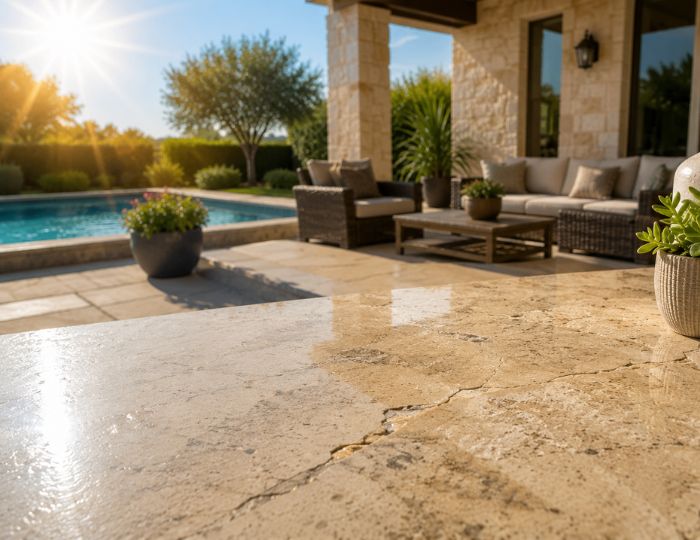
Your outdoor kitchen looked flawless in April. By August, you’re noticing dull spots on the marble bar top, faded patches near the grill, and water beading differently than it did three months ago. You’re wondering if the Georgia sun is actually damaging your stone — and you’re right to ask.
Summer heat doesn’t crack stone, but UV exposure, thermal cycling, and sealer breakdown create real problems that most homeowners don’t see coming. The damage happens slowly, then suddenly becomes obvious when the sealer fails or pigments fade.
This guide explains exactly what summer conditions do to different stone types, which damage is reversible, and how to protect outdoor installations before the next heat wave hits.
Table of Contents
Which Type of Stone Owner Are You?
Indoor Stone Only
Your countertops get indirect sunlight through windows. You’re safe from most heat damage, but UV fading near south-facing windows is still possible with dark marbles.
Covered Outdoor Kitchen
You have a pergola or roof over your stone surfaces. Heat is moderate, but UV still reaches your countertops during peak sun hours. Sealer maintenance matters here.
Full Sun Exposure
Your stone gets 6+ hours of direct Georgia sun daily. This is the highest-risk scenario for UV fading, sealer breakdown, and thermal stress. You need a protection plan.
Which Stone Types Handle Heat (And Which Don’t)
Not all natural stone responds to summer conditions the same way. The stone’s mineral composition, density, and porosity determine how it handles UV exposure and thermal stress. Here’s what you need to know about common outdoor stone types.
Granite
Heat tolerance: Excellent
UV resistance: Excellent
The igneous structure makes granite highly stable under thermal stress. Colors won’t fade, surface won’t degrade. The only maintenance issue is sealer breakdown, which is manageable with outdoor-rated products reapplied every 2-3 years.
Quartzite
Heat tolerance: Excellent
UV resistance: Very Good
Even harder than granite, quartzite handles extreme heat without issue. Minor fading can occur in varieties with heavy iron content (rusty reds and golds), but most colors remain stable for decades outdoors.
Marble
Heat tolerance: Good
UV resistance: Fair to Poor
White marbles like Carrara handle sun reasonably well. Dark marbles (Emperador, Nero Marquina) will fade noticeably within 2-3 years in full sun. Outdoor marble needs UV-inhibiting sealer and ideally some shade protection during peak hours.
Travertine
Heat tolerance: Good
UV resistance: Fair
Porous structure means rapid sealer degradation in sun. The stone itself stays stable, but water absorption increases dramatically once the sealer fails, leading to freeze-thaw damage in winter and staining issues year-round.
Limestone
Heat tolerance: Fair
UV resistance: Poor
Soft, porous, and vulnerable to UV degradation. Not recommended for full-sun outdoor countertops without significant shade protection. Works better for outdoor flooring under cover than for horizontal surfaces exposed to direct sun and cooking heat.
Soapstone
Heat tolerance: Excellent
UV resistance: Poor (for finish, not stone)
The stone itself loves heat, but mineral oil finishes degrade rapidly in sun, requiring monthly reapplication outdoors. The surface gets patchy and uneven without constant maintenance. Better suited for indoor use.
⚠️ Important: Even heat-tolerant stones need proper sealing for outdoor use. The stone may be fine, but unsealed granite or quartzite will still absorb grease, wine, and cooking oils that become nearly impossible to remove without professional extraction.
Heat vs. UV Damage: Understanding the Difference
Most homeowners say “heat damage” when they really mean UV damage or thermal shock. These are three separate problems with different causes and different solutions. Here’s how to tell them apart.
Direct Heat Exposure
What it is: Sustained high temperatures (120-150°F+) from sun or proximity to grills
What it does: Accelerates sealer evaporation and oxidation, can cause expansion in porous stones
How to identify: Countertops feel hot to touch, sealer fails faster than expected (water stops beading within months)
Fix: Switch to high-temp penetrating sealer, create shade, increase sealing frequency to 1-2 years
UV Degradation
What it is: Ultraviolet radiation breaks down organic pigments and chemical bonds in stone and sealer
What it does: Causes color fading (especially in dark marbles), creates chalky sealer residue, yellows some sealers
How to identify: Stone color looks lighter or uneven compared to protected areas, sealer surface feels rough or powdery
Fix: Strip old sealer, polish if needed, reseal with UV-stable product, install shade during peak sun (10am-4pm)
Thermal Shock
What it is: Rapid temperature changes causing differential expansion (hot pan on cold stone, or cold rain on hot stone)
What it does: Creates microfractures or, in rare cases, visible cracks near heat sources
How to identify: Hairline cracks near grill area, spiderweb patterns, stone sounds different when tapped
Fix: Use trivets and cutting boards, avoid splashing cold water on hot stone, select thicker slabs (3cm minimum) for high-heat zones
In most Georgia outdoor kitchens, UV degradation is the primary culprit, not heat itself. The stone can handle 150°F surface temps without issue. It’s the 8 hours of direct UV bombardment that breaks down sealers and fades pigments.
7 Signs Your Stone Is Suffering From Summer Exposure
Damage accumulates slowly, then becomes obvious all at once. Catch these warning signs early and you can reverse most problems with maintenance instead of replacement.
Water Stops Beading
When you splash water on the surface, it soaks in within seconds instead of beading up. This means sealer has failed and the stone is now vulnerable to staining.
Color Looks Faded or Uneven
Areas in direct sun appear lighter than protected sections. This is permanent pigment loss in the stone, not just dirty sealer. Professional re-polishing may restore some depth.
Chalky White Residue
Powdery white film that won’t wipe away is degraded sealer breaking down under UV. The sealer needs to be stripped and replaced, not just cleaned.
Dark Spots That Won’t Clean
Oil-based stains (grease, food) have penetrated below the surface because the sealer failed. These require poultice extraction or professional honing to remove.
Dull or Hazy Finish
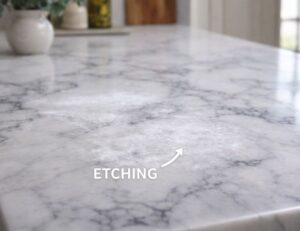
The polished shine is gone even after cleaning. This is surface etching from acid (rain, citrus) or physical wear from UV breaking down the surface layer.
Rough or Pitted Texture
The surface feels rougher than it used to, especially in high-sun areas. UV and moisture have begun eroding softer minerals, creating micro-pitting that accelerates further damage.
Hairline Cracks Near Heat Sources
Thin cracks radiating from grill placement or fire features. This is thermal stress, not UV. The cracks may grow over time if heat exposure continues without protection.
💡 Pro Tip: Take close-up photos of your outdoor stone in the same spot every spring. Year-over-year comparison reveals gradual fading and damage patterns you won’t notice day-to-day. It also gives professionals baseline documentation when assessing restoration options.
How to Protect Outdoor Stone From Summer Damage
Prevention costs less than restoration. Most summer damage is avoidable with the right products, installation choices, and maintenance rhythm.
Sealer Selection: The Foundation of Outdoor Stone Protection
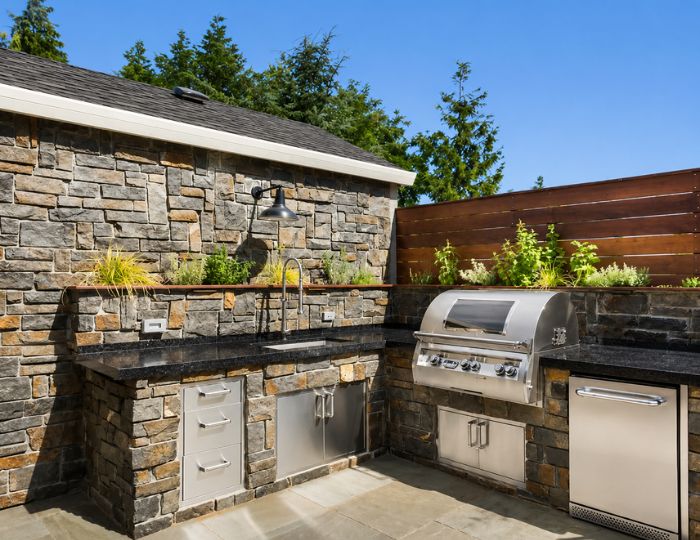
Indoor sealers fail outdoors. UV-stable penetrating sealers rated for exterior use are non-negotiable for Georgia outdoor kitchens. Here’s what to specify:
Sealer Requirements for Outdoor Stone
- Penetrating (impregnating) formula — not topical coating. Topical sealers peel and yellow in sun.
- UV inhibitors built into chemistry — specifically labeled “outdoor” or “exterior grade”
- Fluoropolymer or advanced siloxane base — more durable than basic silicone sealers
- Oil and water repellency — outdoor kitchens need both hydrophobic and oleophobic protection
- Breathable formulation — allows moisture vapor transmission to prevent subsurface damage
Expect to reseal outdoor stone every 1-2 years in full sun, compared to 3-5 years for indoor surfaces. That’s not product failure — that’s normal UV degradation even with quality sealers.
Shade Strategies: Reducing UV Exposure
Permanent Structures
Roof extensions over outdoor kitchens block 100% of direct UV during peak hours (10am-4pm)
Pergolas with retractable canopy give you control — shade during summer, sun during spring/fall
Impact: Reduces UV by 80-100%, extends sealer life to 3-4 years
Movable Shade
Commercial-grade umbrellas (9-11ft diameter, UV-rated fabric) positioned strategically
Retractable awnings that extend during peak sun hours
Impact: Reduces UV by 50-70%, more affordable than permanent structures
Strategic Orientation
East-facing outdoor kitchens get morning sun (less intense) and afternoon shade
Avoid west-facing installations — they take full afternoon heat and UV when it’s most damaging
Impact: Reduces UV exposure by 30-40% through better positioning
Thermal Management: Preventing Heat Damage
Even heat-tolerant stones benefit from temperature management around cooking zones.
↓ What Keeps Heat Manageable
- 3cm thick slabs (better thermal mass)
- 12-18″ clearance between grill and stone
- Heat-resistant trivets for hot pans
- Light-colored stone (reflects heat)
- Insulated grill surrounds
- Evening cooking when possible
↑ What Increases Heat Risk
- 2cm thin slabs (less thermal buffer)
- Built-in grills with stone surround
- Placing hot cookware directly on stone
- Dark stone colors (absorb more heat)
- No ventilation around grill
- Midday cooking in full sun
Stone Selection: Choosing for Outdoor Durability
If you’re installing new outdoor stone or replacing damaged surfaces, material selection is your first line of defense.
Best Stone Choices for Full-Sun Georgia Outdoor Kitchens
First Choice:
- Light-colored granite (Kashmir White, Colonial White)
- White or cream quartzite
- Carrara marble (if sealed aggressively)
Acceptable with Shade:
- Mid-tone granite (Uba Tuba, Steel Grey)
- Travertine (light colors only)
- Polished soapstone (with monthly maintenance)
Avoid in Full Sun:
- Dark marble (Emperador, Nero Marquina)
- Limestone (any color)
- Honed or leathered finishes (harder to seal effectively)
Summer Stone Maintenance Schedule
Outdoor stone needs more frequent care than indoor surfaces. This schedule keeps your countertops protected through Georgia’s brutal summer months.
Weekly
- Rinse surfaces with clean water to remove debris and prevent heat concentration from organic matter
- Wipe down with pH-neutral stone cleaner after cooking sessions
- Check water beading — if water soaks in within 30 seconds, sealer needs attention
Monthly (May-September)
- Deep clean with stone-safe degreaser to remove buildup
- Inspect for early signs of damage (dullness, discoloration, rough spots)
- Apply sealer booster/maintainer product if recommended by your stone pro
Annually (Spring)
- Professional resealing with outdoor-rated penetrating sealer
- Assessment of surface condition — honing or polishing if finish is degraded
- Stain extraction if needed before summer entertaining season
Every 2-3 Years
- Professional honing and polishing to restore surface finish and remove accumulated UV damage
- Reevaluation of sealer type — upgrade if current product isn’t performing
- Consideration of shade improvements if damage is accelerating
💡 Pro Tip: Schedule your annual professional sealing in March or early April, before the intense summer UV begins. This gives the sealer maximum cure time before being tested by peak sun exposure in June-August.
What Professional Maintenance Includes
DIY maintenance keeps stone clean. Professional care addresses damage you can’t fix with consumer products. Here’s what to expect from annual service:
- Surface evaluation: Assessment of sealer condition, UV damage, staining, and finish degradation
- Old sealer stripping: Removal of degraded sealer residue using appropriate solvents (if needed)
- Stain extraction: Poultice treatment for oil-based stains that have penetrated below the surface
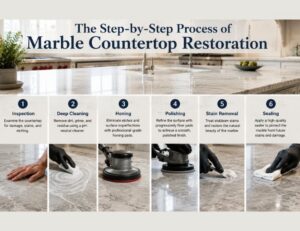
- Honing (if needed): Light abrasive treatment to remove surface etching and restore smooth texture
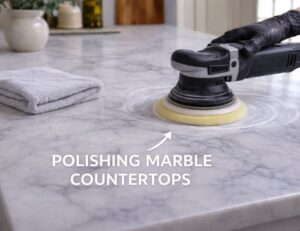
- Polishing (optional): Diamond polishing to restore shine and depth to faded stone
- Penetrating sealer application: 2-3 coats of UV-stable outdoor sealer with proper dwell time between applications
- Maintenance recommendations: Specific advice based on the condition of your stone and exposure factors
Cost for professional outdoor stone maintenance in the Atlanta metro area typically ranges $300-600 for basic resealing and $800-1,500 for restoration with honing/polishing, depending on square footage and stone condition.
That’s far less expensive than replacement. New outdoor stone countertops run $75-150+ per square foot installed, meaning a typical outdoor kitchen countertop replacement costs $3,000-8,000.
Frequently Asked Questions
Can heat damage marble countertops?
+
Direct heat won’t crack marble, but prolonged sun exposure can fade pigments in darker marbles over time. The real threats are thermal shock from hot pans on cold stone and moisture expansion in outdoor installations. Indoor marble countertops are generally safe from heat damage with normal use, but outdoor marble requires UV-stable sealers and shade protection to prevent color fading and surface degradation.
Does sunlight damage granite?
+
Granite is highly UV-resistant and won’t fade like marble or limestone. However, intense sunlight can degrade low-quality sealers, leaving the stone vulnerable to staining and moisture penetration. Outdoor granite countertops need UV-stable penetrating sealers reapplied every 1-3 years depending on sun exposure. The stone itself remains stable, but the protective barrier requires maintenance in direct sun.
What causes UV damage to natural stone?
+
UV rays break down organic pigments and iron compounds in stone, causing fading and discoloration over months or years. Softer stones like marble and limestone are most vulnerable. UV also degrades topical sealers and coatings, creating a chalky appearance and reducing water resistance. Modern penetrating sealers with UV inhibitors significantly slow this process, but no sealer can completely prevent UV effects on pigment-rich stones in full sun.
How do I protect outdoor stone countertops from summer heat?
+
Use UV-stable penetrating sealers specifically rated for outdoor use, install shade structures over cooking and dining areas, apply sealer every 1-2 years instead of the typical 3-5 year indoor cycle, rinse surfaces weekly to remove heat-concentrating debris, and avoid dark-colored stones in full sun if fade resistance is critical. Granite and quartzite handle summer heat better than marble, limestone, or travertine in outdoor installations.
Can faded outdoor stone be restored?
+
Professional honing and polishing can restore much of the lost depth and color to faded stone by removing the damaged surface layer and exposing fresh stone underneath. This works well for marble and limestone that has surface-level UV damage. However, if pigments have faded deep into the stone structure (common with dark marbles after 5+ years in full sun), restoration has limits. Polishing improves appearance significantly but won’t return the stone to original darkness.
Is travertine good for outdoor kitchens in Georgia?
+
Travertine can work in covered outdoor kitchens with diligent maintenance, but it’s not ideal for full-sun countertop applications. The high porosity means sealers break down faster, and the soft calcium carbonate structure makes it vulnerable to etching from acidic rain and food. If you choose travertine for outdoor use, opt for light colors (less sun absorption), filled varieties (fewer stain-trapping voids), and commit to annual professional resealing. Granite or quartzite are better choices for high-use outdoor cooking surfaces.
How often should outdoor stone be sealed in Georgia?
+
Full-sun outdoor stone in Georgia’s climate needs resealing every 1-2 years with UV-stable penetrating sealer. Covered outdoor areas can extend to 2-3 years. Test water absorption monthly during summer — if water soaks in within 30 seconds instead of beading, it’s time to reseal regardless of schedule. Dense stones like granite may stretch closer to 2 years between sealing, while porous marble or travertine may need annual treatment.
Can I use regular indoor sealer on outdoor stone?
+
No. Indoor sealers lack UV inhibitors and will break down rapidly in direct sunlight, often failing within 6-12 months. They may also yellow or develop a chalky appearance as UV degrades the chemistry. Always specify outdoor-rated, UV-stable penetrating sealers for exterior stone applications. The cost difference is minimal ($50-100 more for outdoor formula), but the performance difference is dramatic.
Protect Your Investment Before the Next Heat Wave
Summer damage accumulates slowly, then becomes expensive quickly. If your outdoor stone is showing signs of UV exposure, sealer failure, or thermal stress, professional assessment and restoration now costs far less than replacement later.
Natural Stone Services specializes in outdoor stone restoration and protection throughout the Atlanta metro area. We assess damage honestly, restore what can be saved, and implement protection strategies that extend the life of your outdoor kitchen for years.
No pressure, no pitch. Just an honest evaluation of your stone’s condition and clear recommendations for protection or restoration.
Related Resources
- The Ultimate Guide to Natural Stone Polishing & Care — comprehensive maintenance strategies
- Marble Honing, Polishing, and Sealing — professional restoration services
- Granite Honing, Polishing, and Sealing — outdoor granite care expertise
- Service Areas — coverage throughout Atlanta and surrounding counties