
The Hidden Damage That Occurs When Stone Countertops Go Unprotected
Natural stone countertops are chosen for their durability, beauty, and long-term value. Yet many homeowners are surprised when surfaces begin to look dull, stained, or worn years earlier than expected. In most cases, the issue isn’t the stone itself—it’s what happens when protective care is overlooked.
Understanding how unprotected stone deteriorates helps homeowners make better decisions early, before minor surface changes turn into permanent damage or costly replacement.
The Slow Damage That Happens Below the Surface
Stone surfaces are porous, even when they appear solid and smooth. Without protection, moisture, oils, and everyday contaminants gradually absorb into microscopic openings. This process is rarely noticeable at first. Instead, damage builds quietly beneath the surface until visual changes finally appear.
What often starts as a subtle loss of clarity can evolve into darkened areas, uneven color, or rough patches that no longer clean up with routine care. By the time these changes are obvious, the stone has already absorbed materials that are difficult to remove.
For a deeper look at how different stone types respond to wear, moisture, and surface damage, our Ultimate Guide to Natural Stone Polishing & Care breaks down long-term maintenance considerations in detail.
Why Stains and Etching Become Harder to Fix Over Time
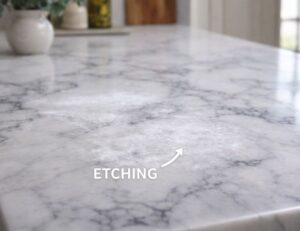
Once absorbed materials settle into stone, they don’t simply wipe away. Oils and pigments can permanently darken certain areas, while acidic substances may react chemically with the surface. On stones like marble, this reaction leaves behind etching—dull or rough spots that disrupt the finish.
In some environments, additional surface treatments—such as anti-etch applications—may be used to help reduce the impact of acidic exposure on sensitive stone, but they work best as part of a broader care strategy rather than a standalone fix.
Granite is more resistant, but it is not immune. Repeated exposure to cooking oils, spills, and cleaners can still create uneven coloration and surface haze. Without preventative protection, these changes compound gradually, making restoration more involved down the line.
When Prevention Turns Into Restoration
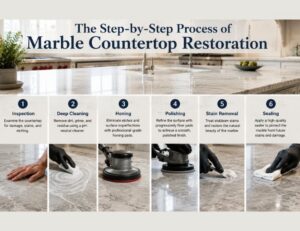
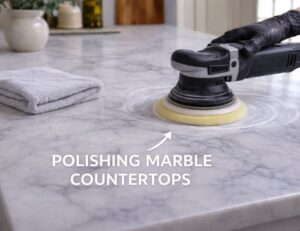
Many homeowners only consider professional help once visible damage appears. At that stage, preventative care is no longer enough. Surface wear must be corrected through professional polishing methods that remove damage and rebuild the finish—especially on marble surfaces that are prone to etching or granite countertops that have lost clarity over time.”
While restoration is highly effective, it is also more disruptive than routine protection. Skipping early preventative care often means investing more time, effort, and cost later to restore the surface to its original appearance.
The Hidden Cost of Waiting Too Long
As surface damage progresses, restoration options become more limited. Deep staining, widespread etching, or uneven wear may require more aggressive resurfacing. In extreme cases, homeowners assume replacement is the only option—when preventative protection earlier could have preserved the original stone.
The real cost of skipping protection isn’t always immediate. It’s the shortened lifespan of the surface and the loss of flexibility in how damage can be addressed later.
How Protection Preserves Long-Term Value
Preventative care works by slowing absorption and reducing how deeply contaminants penetrate the surface. This gives homeowners time to clean up spills, limits chemical reactions, and helps stone age evenly. Over time, protected surfaces maintain clarity, consistency, and structural integrity far better than unprotected ones.
Viewed this way, protection isn’t about aesthetics alone—it’s about preserving options. It allows surfaces to be maintained rather than corrected, extending their usable life and reducing the likelihood of major intervention.
Frequently Asked Questions About Unprotected Stone Countertops
What happens if stone countertops aren’t protected?
Unprotected stone gradually absorbs moisture, oils, and contaminants. Over time, this leads to staining, surface dullness, and uneven wear that routine cleaning cannot correct.
Can unprotected stone be permanently damaged?
Yes. Extended exposure can cause deep staining or chemical reactions that alter the surface texture. While restoration can improve appearance, some damage may not fully reverse.
Why do stone countertops start to look cloudy or dull?
Cloudiness develops when absorbed residue disrupts how light reflects off the surface. This often occurs gradually, making the change noticeable only after standard cleaning stops working.
Do damaged stone countertops need to be replaced?
Not always. Many surfaces can be professionally restored, but prevention helps avoid reaching the point where restoration becomes more intensive or replacement is considered.
Is preventative stone care cheaper than restoration?
In most cases, yes. Preventative protection helps avoid advanced damage, reducing the need for corrective services and extending the lifespan of the stone.
For more guidance on maintaining, protecting, and extending the life of natural stone, explore our Stone Polishing & Care resource hub.