Marble countertops are known for their elegant appearance and smooth, reflective finish. Over time, however, daily use can leave the surface looking dull or uneven. Scratches, cleaning residue, and normal wear can slowly reduce the shine that makes marble so visually striking.
Restoring that finish requires more than simply wiping the surface clean. Marble polishing is a controlled process designed to refine the stone and restore its natural clarity without damaging the surface.
Why Marble Countertops Lose Their Shine
Marble is a calcium-based stone that reacts differently than harder materials such as granite. Everyday activities in kitchens—food preparation, cleaning, and normal abrasion—can gradually wear down the polished finish.
Common causes of dull marble countertops include:
- Light surface scratches from normal use
- Residue from cleaning products
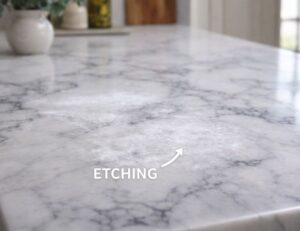
- Minor etching from acidic substances
- General surface wear over time
These changes do not usually mean the stone itself is damaged. Instead, they affect the top layer of the marble, which can often be refined through professional polishing techniques.
Understanding the Marble Polishing Process
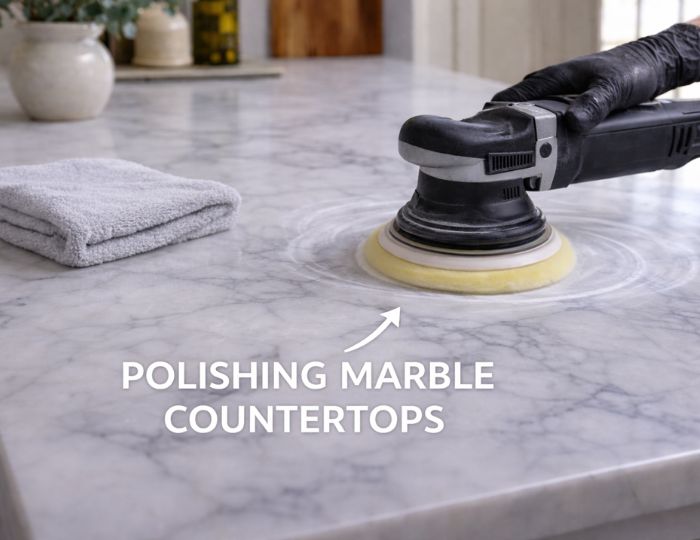
Polishing marble countertops is not the same as applying wax or a surface coating. True polishing works by refining the stone itself, gradually smoothing the surface until it reflects light evenly again.
Professionals use specialized stone polishing techniques designed specifically for marble’s delicate composition. The process carefully removes microscopic surface imperfections and rebuilds the polished finish.
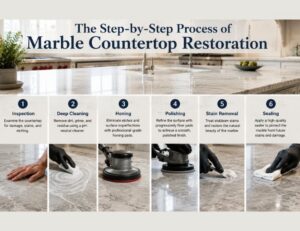
Depending on the condition of the countertop, the process may involve controlled honing followed by polishing compounds that bring the stone back to a clear, reflective surface.
Why Improper Polishing Can Damage Marble
Because marble is softer than many natural stones, aggressive polishing methods can easily cause additional damage. Household abrasives, harsh cleaners, or incorrect tools may leave swirl marks, scratches, or uneven finishes.
For this reason, marble refinishing requires specialized knowledge of stone polishing techniques. Experienced technicians understand how to refine the surface gradually while preserving the integrity of the stone.
How Professional Marble Polishing Restores the Surface
Professional polishing focuses on correcting the stone’s surface finish rather than covering imperfections. Technicians evaluate the countertop and select the appropriate abrasives and polishing compounds for the stone type and condition.
During the process, the marble surface is refined step by step until the stone regains a consistent shine and smooth texture. When the finish has been restored, the countertop often looks brighter, cleaner, and more uniform.
Homeowners experiencing dullness across larger areas may benefit from
professional marble honing and polishing, which restores clarity while protecting the natural character of the stone.
When Marble Countertops Need Restoration Instead of Polishing
In some situations, simple polishing is not enough to fully correct the surface. Deep scratches, widespread etching, or uneven wear may require a more comprehensive restoration approach.
When the finish has deteriorated significantly,
countertop restoration can refine the stone and rebuild the original surface before the final polish is applied.
Maintaining the Shine of Marble Countertops
After polishing, simple maintenance habits help preserve the restored finish. Using stone-safe cleaning products, avoiding acidic cleaners, and wiping spills quickly all contribute to keeping marble surfaces looking their best.
With proper care, polished marble countertops can maintain their shine for many years while continuing to add beauty and value to the home.
Frequently Asked Questions About Polishing Marble Countertops
Can marble countertops be polished after they become dull?
Yes. In many cases dull marble can be restored through professional polishing that refines the stone’s surface and rebuilds the reflective finish.
Is polishing marble countertops safe?
When performed using the correct tools and techniques, polishing is safe for marble surfaces. Improper methods, however, can create scratches or uneven finishes.
How often should marble countertops be polished?
The frequency depends on usage and exposure to wear. High-traffic kitchens may require polishing sooner than lightly used surfaces.
Can I polish marble countertops myself?
Minor cleaning and maintenance are safe for homeowners, but restoring shine usually requires professional polishing compounds and equipment designed specifically for marble.
What is the difference between honing and polishing marble?
Honing smooths the surface and removes minor imperfections, while polishing refines the stone further to restore its reflective shine.
Understanding the Right Way to Restore Marble Shine
Marble countertops remain one of the most elegant natural stone surfaces available, but maintaining their polished appearance requires the right approach. When dullness, etching, or surface wear appears, proper polishing techniques can restore the stone’s natural beauty without damaging the surface.
To learn more about how stone polishing and maintenance protect natural surfaces throughout the home, explore our complete guide to
natural stone polishing and care.