

Natural stone has a presence that synthetic materials simply can’t recreate. The depth, movement, and natural variation in marble, granite, terrazzo, and other stones bring a sense of timeless beauty to a home. Yet daily life—spills, foot traffic, moisture, and cleaning products—can gradually dull that beauty. Etching, stains, scratches, and wear patterns appear, leaving homeowners unsure what can be repaired and what requires replacement.
The good news is that most stone surfaces can be restored to like-new condition without demolition. This guide explains how restoration works across countertops, floors, showers, and other high-use spaces, giving you clarity and confidence as a homeowner.
Understanding Natural Stone Restoration
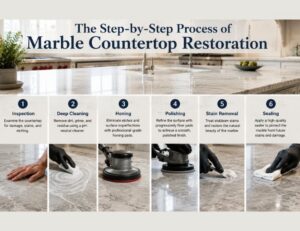
Stone restoration blends science and craftsmanship to return stone to its original finish. Unlike general cleaning or topical polishing, restoration removes the damaged surface layer so the fresh stone beneath can shine again. You may hear terms like resurfacing, honing, polishing, or stone refinishing—each addressing a different type of wear.
At its core, restoration removes a thin, worn layer and brings back clarity, consistency, and a finish that looks newly installed. When performed correctly, the transformation can feel dramatic.
- Honing removes scratches, etching, and dull spots.
- Polishing rebuilds the desired sheen, from matte to mirror-like.
- Diamond abrasive resurfacing handles deeper imperfections.
- Sealing protects the restored surface from future staining.
Countertop Restoration: Marble, Granite & Quartzite
Kitchen and bathroom countertops endure daily use—coffee spills, wine, lemon juice, heat, and abrasion. Over time, stone begins to look tired or uneven. Restoration revives countertops by removing surface wear and rebuilding a uniform finish.
Marble Countertops
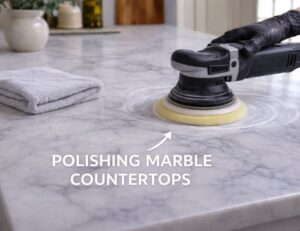
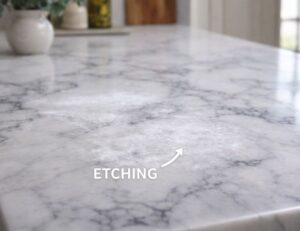
Marble etches easily due to its calcium carbonate makeup. Anything acidic leaves a dull, cloudy mark on the surface. Restoration resolves this completely by honing away the damaged layer, then polishing to the homeowner’s preferred finish.
- Removes etching, dullness, and surface staining.
- Rebuilds clarity and depth through controlled polishing.
- Restores consistency across the entire slab.
Granite Countertops
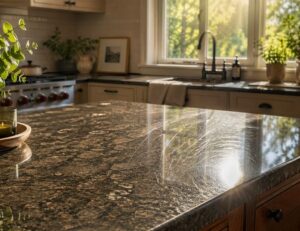
Granite is more resistant than marble but still accumulates scratches, residue buildup, or a faded finish. Professional granite restoration and polishing revives its reflective surface and enhances color richness while smoothing subtle wear.
Sealing for Long-Term Protection
A penetrating sealer helps slow staining, repel moisture, and protect the restored surface. While sealing cannot prevent marble etching, it dramatically improves maintenance and preserves the finish.
Floor Restoration: Marble, Granite & Terrazzo
Stone floors are an investment—and a surface that visibly shows wear in high-traffic areas. Patterns of dullness, scratches, and uneven sheen develop over time. Restoration removes these worn layers and returns balance and beauty to the entire floor.
- Marble floor polishing restores a bright, reflective shine.
- Honing creates a matte or satin finish ideal for busy homes.
- Terrazzo restoration revives clarity and enhances color.
- Professional sealing extends the life of the restored surface.
The result is often better than when the floors were first installed, with renewed depth and a more balanced appearance throughout the space.
Shower & Bathroom Restoration
Stone in showers and bathrooms faces constant exposure to moisture, soap residue, and mineral deposits. Even high-end materials eventually dull or discolor. Restoration removes buildup, corrects etching, and renews the finish so the stone looks fresh again.
- Eliminates soap film and mineral residue.
- Restores clarity to etched or dulled tiles.
- Removes hard water marks and surface staining.
- Improves long-term performance with moisture-resistant sealing.
Because these areas stay damp, a high-quality penetrating sealer becomes especially important for slowing future buildup and protecting the stone’s structure.
When Restoration Makes More Sense Than Replacement
Homeowners often assume damaged stone must be replaced, but that’s rarely the case. Restoration resolves most cosmetic issues quickly and at a significantly lower cost. It also preserves the original stone—something many homeowners prefer.
Restoration is usually the better choice when:
- The stone has dullness, wear, or etching.
- Scratches and surface imperfections are visible.
- The finish looks unbalanced or inconsistent.
- You want to avoid demolition and disruption.
Replacement becomes necessary only when there are deep structural cracks, severe foundation issues, or other damage that cannot be resurfaced safely.
Expert Insight: Why Technique Matters
Natural stone restoration is as much an art as it is a technical discipline. Every type of stone—marble, granite, terrazzo—responds differently depending on its mineral composition, porosity, and the finish a homeowner wants. Skilled technicians evaluate the stone closely, studying the depth of wear, the presence of etching, and how the surface interacts with light before determining the right approach.
The transformation relies heavily on understanding how stone reacts under different abrasives and techniques. Restoring marble surfaces requires a very different touch than granite, and knowing when and how to use diamond abrasives determines whether the finish looks truly seamless. These decisions impact not only how the stone appears immediately after restoration but also how it will age over time.
Sealers add another layer of complexity. Penetrating sealers, topical sealers, and moisture barriers all behave differently, and choosing the wrong one can create long-term maintenance challenges. When experience, technique, and attention to detail come together, the result is a surface that looks beautiful, performs well, and stands the test of time.
FAQs About Natural Stone Restoration
Can restoration fix etching on marble?
Yes. Etching affects only the surface, and honing removes the damaged layer entirely before polishing rebuilds the finish.
How long does stone sealing last?
Most surfaces benefit from resealing every 12–24 months. Kitchens and high-traffic floors may need more frequent maintenance.
Does polishing make stone floors slippery?
Not necessarily. Professionals can adjust the level of sheen, and many homeowners choose honed or satin finishes for added traction.
Can stone showers really be restored?
Absolutely. Restoration removes hard water buildup, etching, and discoloration, and sealing helps protect against moisture.
Is stone restoration messy or disruptive?
Professionals use dust containment and floor protection to keep the home clean. The process is surprisingly contained and respectful of your space.
Restore the Beauty Already in Your Home
Natural stone doesn’t lose its elegance—it simply needs care that matches its quality. With the right restoration approach, your countertops, floors, and showers can look as stunning as the day they were installed.
Want to learn more about caring for natural stone? Explore our Stone Polishing & Care category. For service-level details, visit our Stone Restoration page to continue learning.
If you ever feel unsure about what’s possible, we’re here to help you make confident, informed decisions about protecting the beauty already in your home.