Marble countertops are admired for their natural elegance and timeless character. But homeowners are often surprised when areas of the surface begin to look dull, cloudy, or slightly rough—even when the stone has been carefully cleaned. In many cases, these changes are caused by a common issue known as marble etching.
Understanding what causes marble countertop etching helps homeowners recognize the early signs of surface damage and take the right steps to restore and protect their stone surfaces.
What Is Marble Countertop Etching?
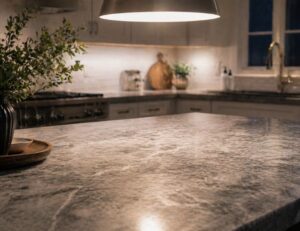
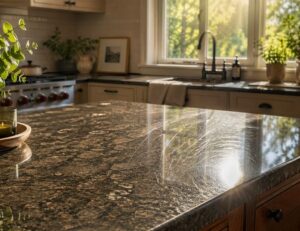
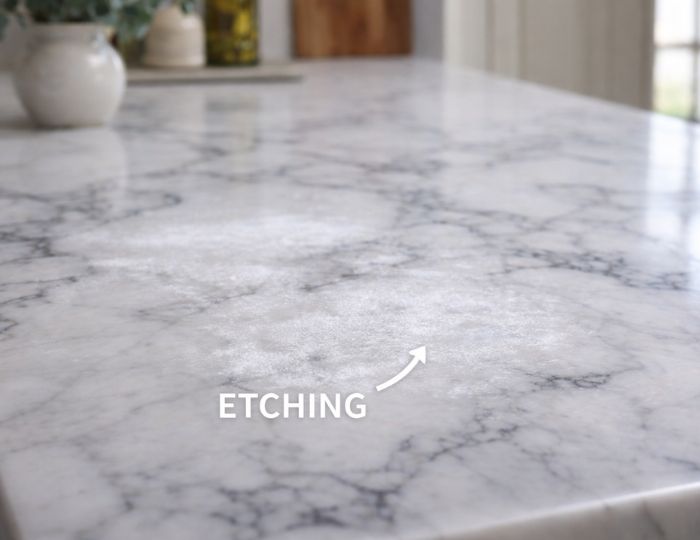
Etching occurs when acidic substances react with the calcium carbonate that naturally exists in marble. Instead of staining the stone, this reaction alters the surface itself, leaving behind dull spots or areas that appear lighter than the surrounding finish. Because the damage happens at a microscopic level, etched marble often feels smooth but reflects light differently. These changes are especially noticeable on polished marble countertops where the glossy finish highlights even small surface imperfections.What Causes Marble Etching on Countertops?
Marble is highly sensitive to acidic materials commonly found in kitchens and bathrooms. Everyday household items can trigger the chemical reaction that leads to natural stone etching.- Citrus juice such as lemon, lime, or orange
- Vinegar or vinegar-based cleaners
- Wine, coffee, and certain sodas
- Tomato sauce and other acidic foods
- Some household cleaning products
Why Etching Is Often Mistaken for Staining
Many homeowners initially believe their marble countertop has developed a stain. However, stains occur when liquids penetrate the stone, while etching is a surface reaction. This distinction matters because cleaning products that remove stains usually will not repair etched marble. If the affected area looks lighter or duller but does not change color when wet, it is likely marble surface damage from etching rather than a traditional stain.Can Etched Marble Countertops Be Fixed?
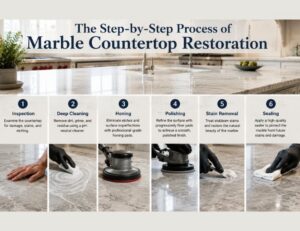
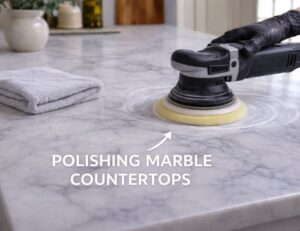
Yes. In most cases, etched marble countertops can be restored. Because etching alters the surface finish rather than penetrating deeply into the stone, professional restoration methods can smooth the surface and rebuild the original clarity. The marble restoration process typically involves controlled honing and polishing techniques that gently refine the stone until the surface reflects light evenly again. When performed correctly, this process removes the visible effects of acid damage while preserving the natural character of the marble. For homeowners dealing with widespread etching or dullness across their kitchen counters, professional countertop restoration is often the most effective way to restore the surface to a consistent finish.How the Marble Restoration Process Works
Professional restoration focuses on correcting the top layer of the stone where the reaction occurred. Technicians use specialized abrasives and polishing compounds designed specifically for calcium-based stone surfaces. The process may include:- Surface evaluation to identify the extent of etching
- Controlled honing to smooth damaged areas
- Polishing to restore clarity and reflection
- Protective treatments to help reduce future damage